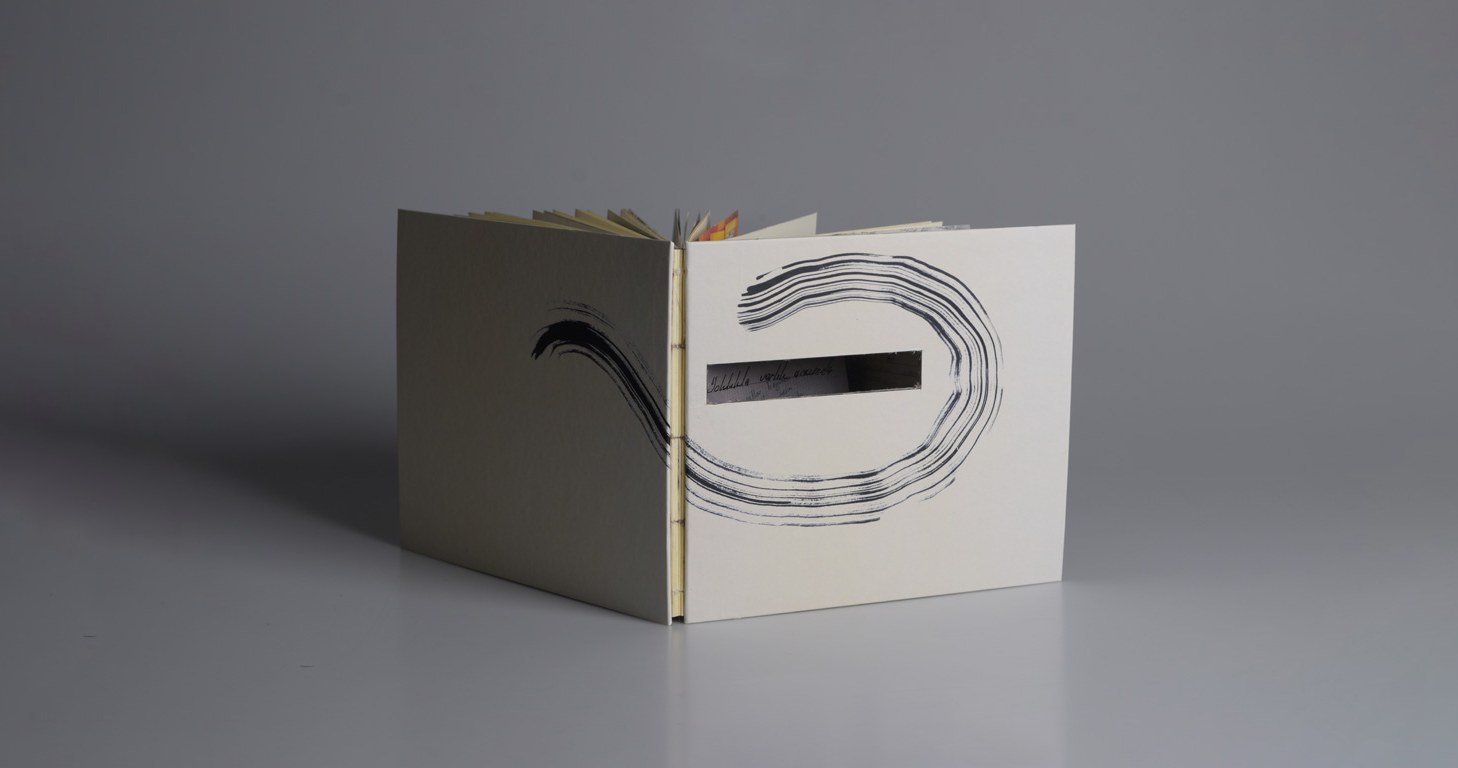
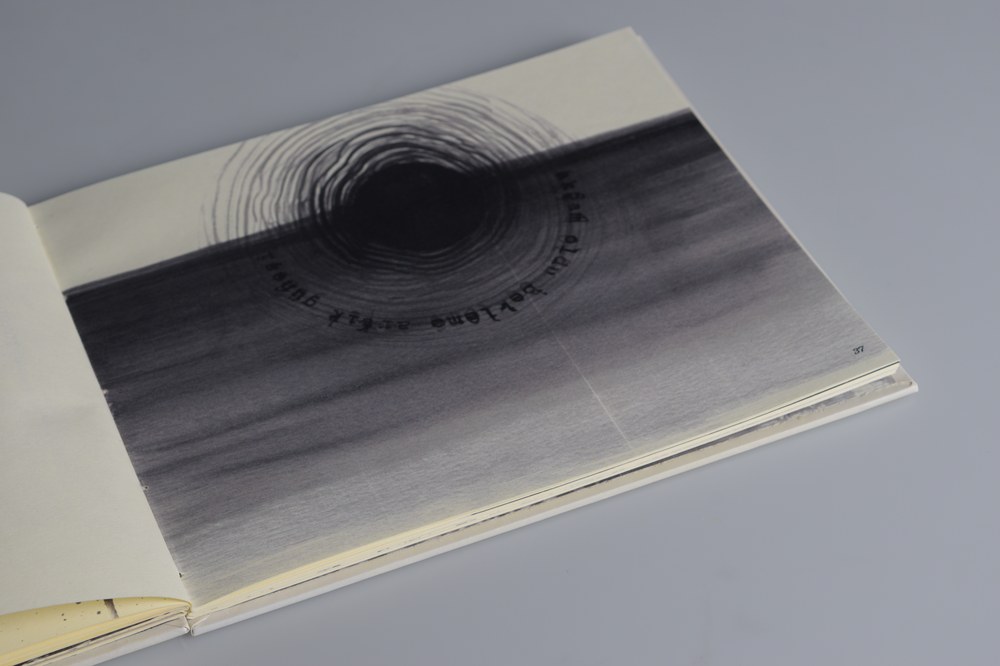
Between Absence and Presence, open book showing the ink spiral and cut-out

At a glance

Question. How do you come to know someone through what they left behind?

Approach. Ink compositions made as direct responses to my father's poems and notes, die-cut chapter titles and an exposed Coptic binding. Incompleteness is the design principle.
Overview

Built from what a person leaves behind: handwritten poetry, underlined passages, margin notes left by my late father. The four dualities, Pessimist/Optimist, Death/Life, Discipline/Flexibility, Spiritualist/Materialist, weren't chosen in advance, they emerged from directly analysing my father's notebooks and books and finding recurring patterns in what he wrote and underlined. The book uses incompleteness as its core design principle.

Opening page of the book, quoting Pontalis on knowing someone through what remains
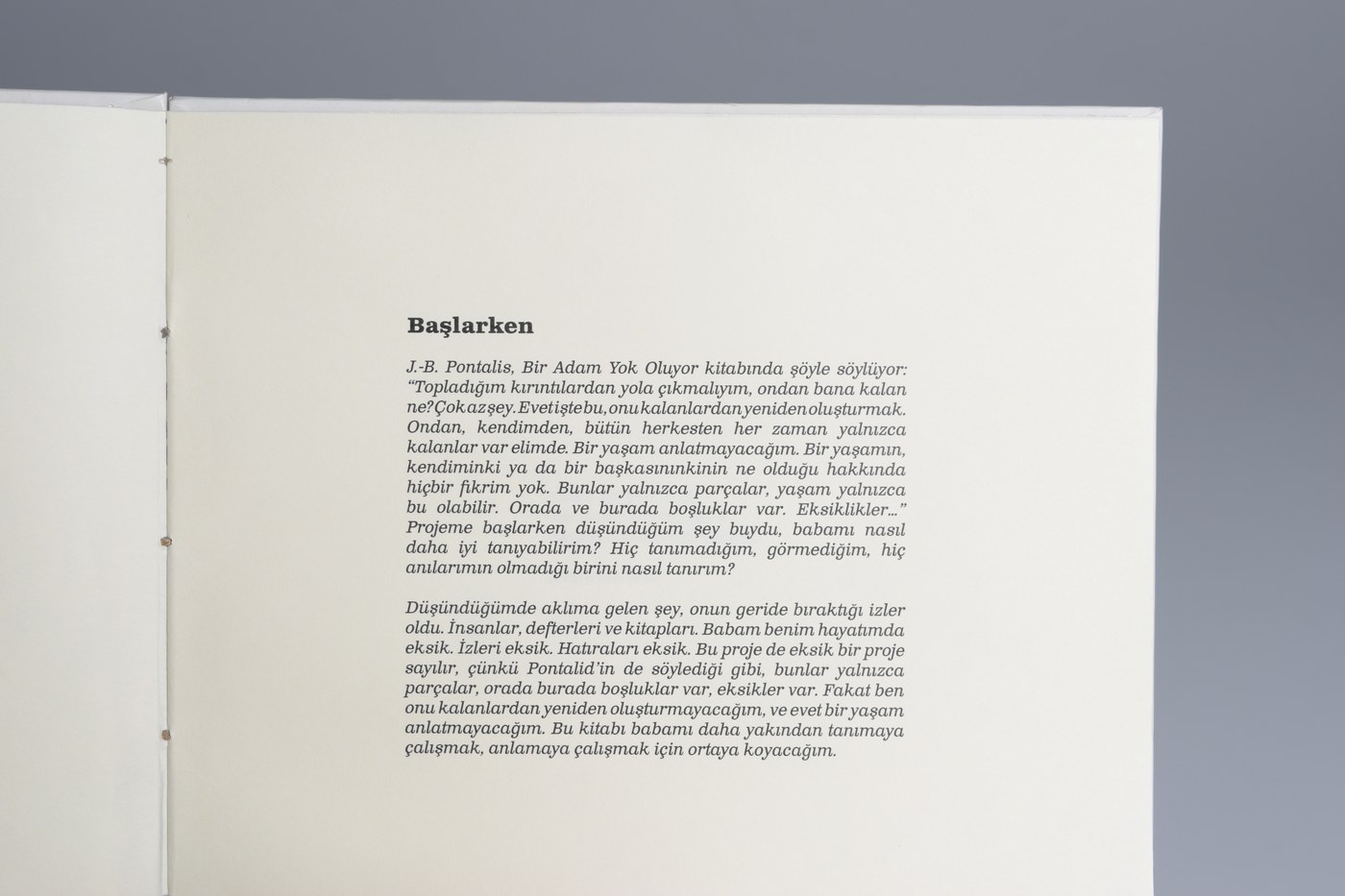
Opening page, titled "Başlarken" (Beginning).
Read the opening text

In his book A Man Is Disappearing, J.-B. Pontalis writes: "I have to work from the fragments I've gathered, what is left to me of him? Very little. And yet this is it, reconstructing him from what remains. Of him, of myself, of everyone, what I hold is always only what's left. I will not tell a life. I have no idea what a life is, mine or anyone else's. These are only fragments, and life may only ever be that. There are gaps, here and there. Absences..." This was what I was thinking as I began this project: how can I come to know my father better? How do you know someone you never knew, never saw, have no memories of?

What came to mind was what he left behind. People, his notebooks, his books. My father is missing from my life. His traces are missing. My memories of him are missing. This project, too, is an incomplete one, because, as Pontalis says, these are only fragments, there are gaps and absences throughout. But I will not reconstruct him from what remains, and no, I will not tell a life. I am putting this book forward as an attempt to know my father more closely, to try to understand him.

Visual language

For each poem or note, an abstract ink composition was created as a direct translation of an emotional response to that text. None are fully legible alone, each spread pairs the mark with its source.

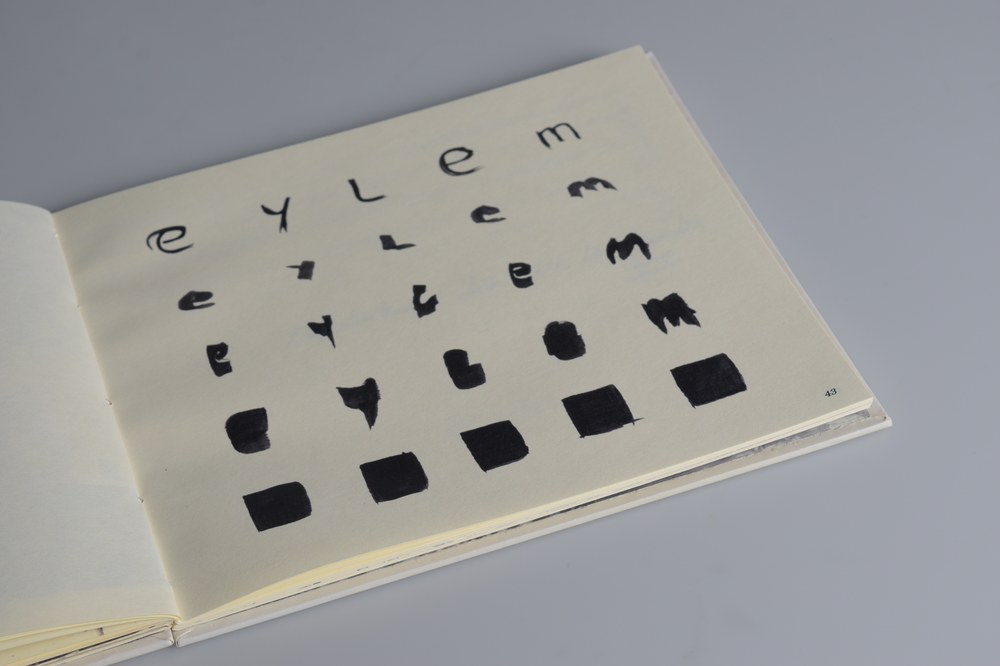
The original plan was a riso print. The die-cut chapter titles replaced it once it became clear the technique carried the theme structurally, not just visually, letters existing only as absences, readable through the collage beneath. Form following meaning rather than form following function.

Abstract ink spiral composition paired with its source text Letterform breaking apart into abstract ink marks, a study in incompleteness
Left: an ink mark paired with its source. Right: a letterform study for the die-cut chapter titles, incompleteness carried down to individual letters.

Typography

Two typographic registers run through the book: a structured serif for the archival, factual layer (quotes, dates, titles), and handwritten or distorted letterforms for the emotional, intuitive layer. Neither dominates. The reader moves between them the way one moves between knowing and not knowing.

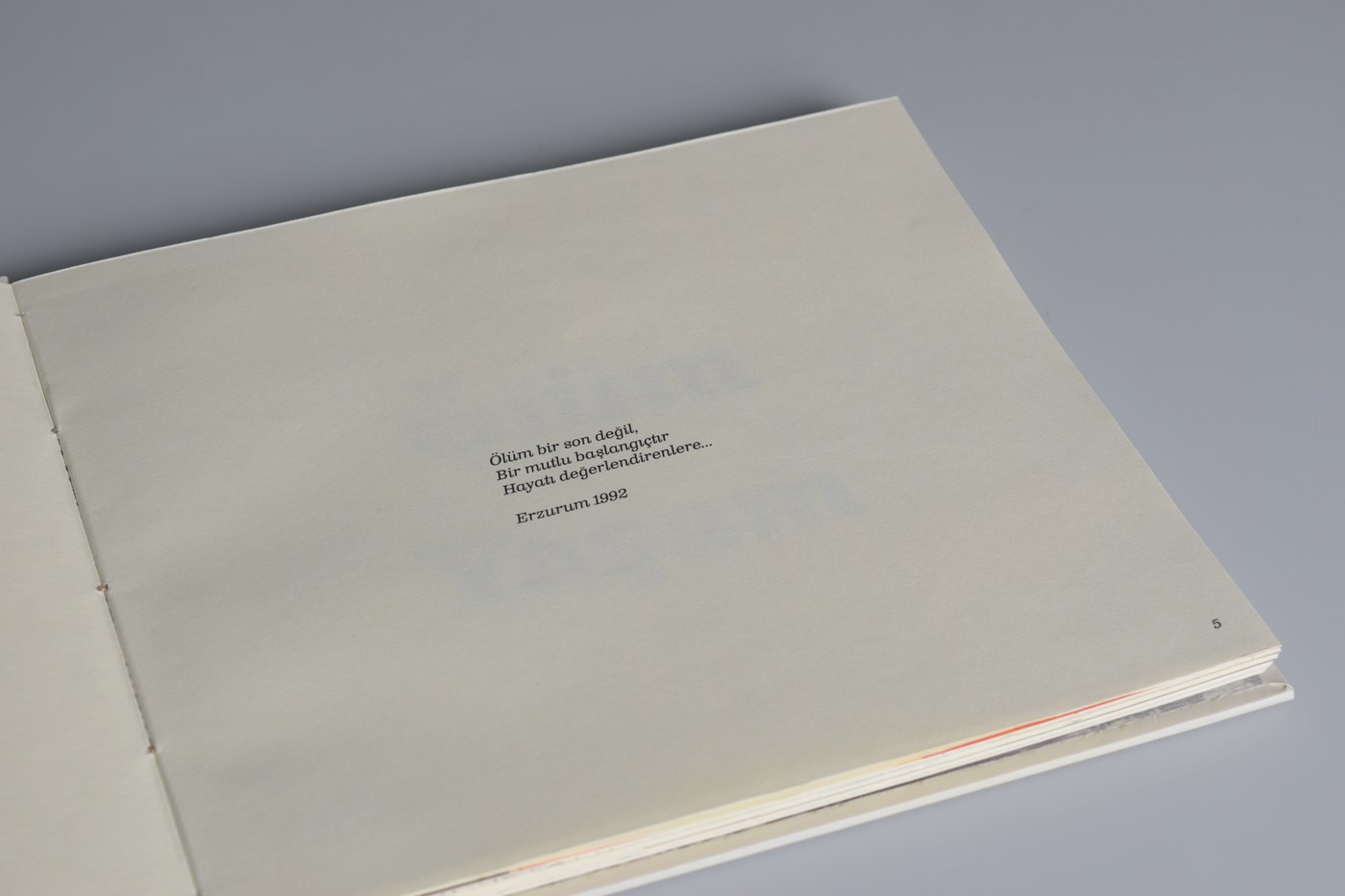
A page pairing a printed poem with a handwritten date, Erzurum 1992
The archival register: a printed poem, dated and placed, no interpretation layered on top.

"Death is not an end, it is a joyful new beginning, for those who cherished life..." Erzurum, 1992.

Production

Uncoated paper, Coptic-bound spine with exposed stitching, arrived at through material testing, a rectangular cut-out on the cover revealing a handwritten fragment beneath. The structure holding the fragments together is visible and unfinished-looking, on purpose: rather than narrating a whole life, the book looks only at what fragments remain.

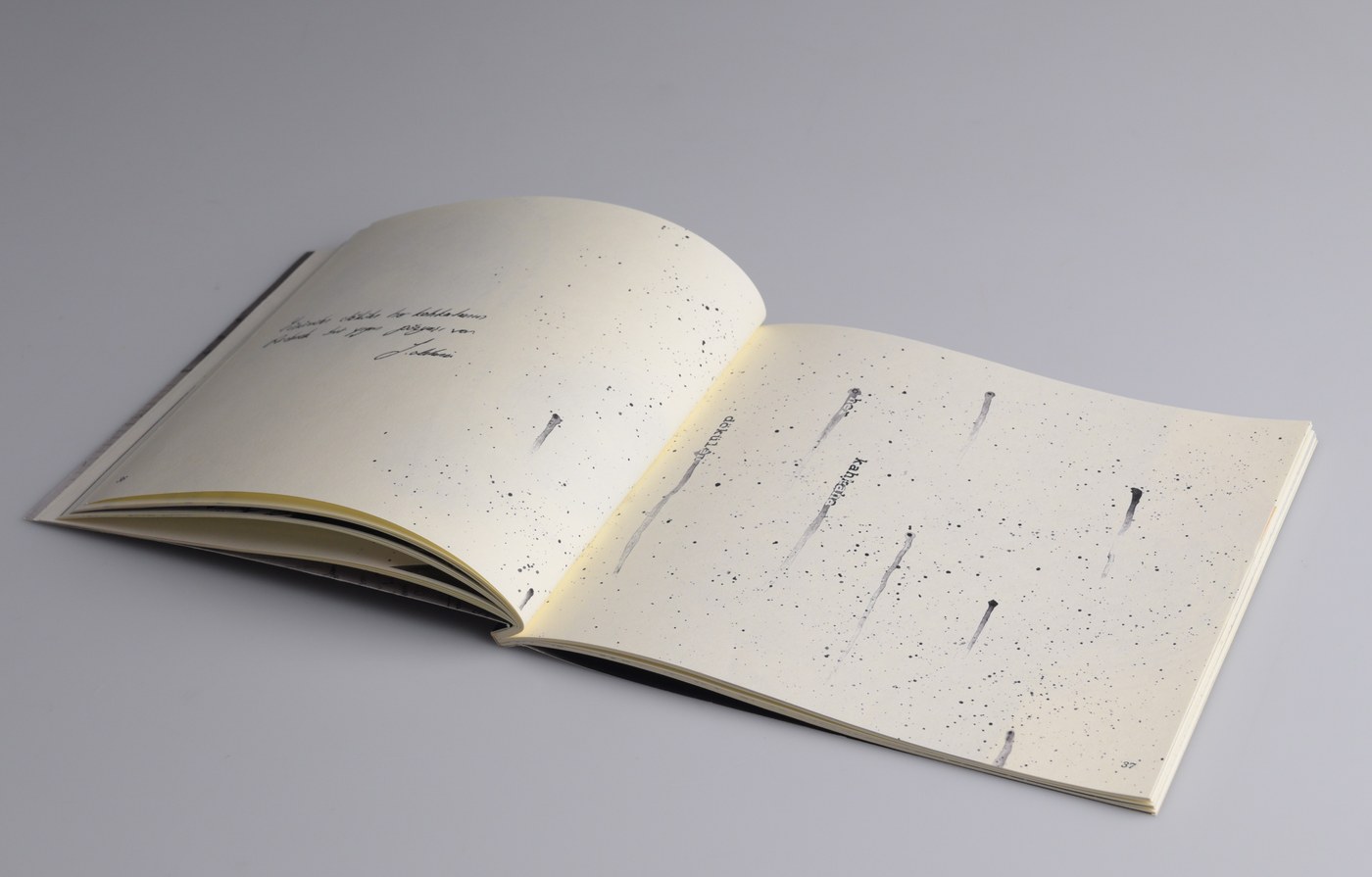
Open book showing uncoated paper texture, ink bleed and a handwritten dedication
Material detail: uncoated stock takes the ink unevenly, on purpose, nothing here is meant to look controlled.

Before Chorale

This book is where the questions behind Chorale began: what remains when someone is gone, and how to design without filling the gap. Chorale asks it through interaction. This book asked it with ink, paper and a cut-out.